
Dark Web Shops: What to Know
This guide is for individuals seeking insights into dark web shops, their implications, and safety measures.

For most users, avoiding dark web shops is the best option due to significant safety and security risks, including scams, malware, and law enforcement action (1). Those who still wish to understand the dark web landscape may benefit from knowing about popular marketplaces and the risks involved. Individuals seeking to understand law enforcement's role in tracking dark web activity may find information on techniques such as undercover operations and cryptocurrency tracking useful (2).
Choosing a Dark Web Shop: Key Criteria
Vendor Reputation
A vendor's reputation is crucial as it reflects their reliability and trustworthiness. Check for user reviews and ratings on forums like Dread [3].
Product Quality and Description
Clear product descriptions and quality assurance are essential. Look for detailed product information and lab testing results where applicable.
Payment and Escrow Options
Secure payment options, including escrow services, protect the buyer's funds until the product is received. Verify that the shop uses a reputable escrow service.
Customer Support and Communication
Effective customer support is vital for resolving issues. Check if the shop has a responsive support team through various communication channels.
Operational Security
A shop's operational security measures, such as PGP encryption, are critical for maintaining user anonymity. Verify that the shop uses proper encryption methods.
Comparison of Dark Web Shops
- Definition
- Part of the internet not indexed by search engines, accessed via special software [3]
- Types of Goods
- Illicit drugs, counterfeit currency, stolen personal data [4]
- Safety Risks
- Exposure to scams, malware, law enforcement action [1]
- Popular Marketplaces
- Silk Road, AlphaBay, Hansa Market [5]
- Legal Consequences
- Severe legal consequences, including imprisonment [6]
- Anonymity Features
- Cryptocurrencies like Bitcoin used for anonymity [7]
- Definition
- n/d
- Types of Goods
- n/d
- Safety Risks
- n/d
- Popular Marketplaces
- n/d
- Legal Consequences
- n/d
- Anonymity Features
- n/d
- Definition
- n/d
- Types of Goods
- n/d
- Safety Risks
- n/d
- Popular Marketplaces
- n/d
- Legal Consequences
- n/d
- Anonymity Features
- n/d
- Definition
- n/d
- Types of Goods
- n/d
- Safety Risks
- n/d
- Popular Marketplaces
- n/d
- Legal Consequences
- n/d
- Anonymity Features
- n/d
- Definition
- n/d
- Types of Goods
- n/d
- Safety Risks
- n/d
- Popular Marketplaces
- n/d
- Legal Consequences
- n/d
- Anonymity Features
- n/d
- Definition
- n/d
- Types of Goods
- n/d
- Safety Risks
- n/d
- Popular Marketplaces
- n/d
- Legal Consequences
- n/d
- Anonymity Features
- n/d
What are Dark Web Shops
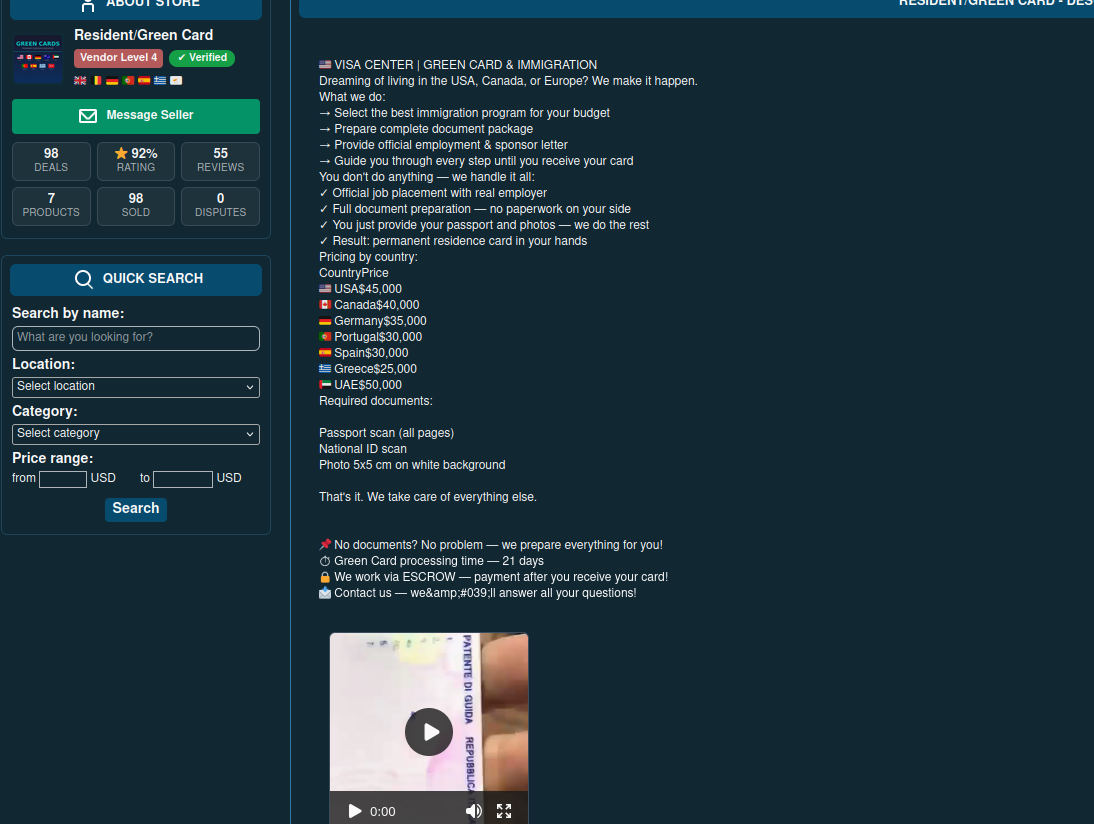
Dark web shops are online marketplaces operating on the dark web, a part of the internet not indexed by traditional search engines and accessible only through specialized software, such as Tor (3). These platforms serve various purposes, primarily facilitating the sale of illicit goods and services. Common offerings include illegal drugs, counterfeit currency, stolen personal data, and hacking services (4). The anonymity provided by the dark web allows users to engage in transactions that would be illegal on the surface web.
Operations of dark web shops typically involve the use of cryptocurrencies, like Bitcoin, to maintain user anonymity and protect financial transactions from law enforcement tracking (7). While some marketplaces have gained notoriety, such as Silk Road and AlphaBay, many others have emerged following the shutdown of prominent sites (5). Despite ongoing law enforcement efforts to dismantle these platforms, active dark web markets still exist as of 2023 (8).
Engaging with dark web shops carries significant risks. Users may encounter scams, malware, and potential legal consequences, including imprisonment for purchasing illegal items (1) (6). Law enforcement employs various methods to monitor and investigate dark web activities, making it essential for users to understand these risks before attempting to engage with such marketplaces (2). The overall landscape of dark web shops may appeal to individuals seeking anonymity or those interested in illicit goods, but it comes with severe safety and security concerns.
Types of Goods and Services Sold
Dark web shops offer a range of illicit goods and services that cater to various illegal activities. Common items available include illegal drugs, counterfeit currency, stolen personal data, and hacking services. For instance, drugs such as marijuana, ecstasy, and opioids can be purchased discreetly, often with varying quality and price points depending on the vendor (4). Counterfeit currency is another prevalent offering, allowing users to acquire fake bills that can be used in transactions on the surface web.
Stolen personal data, including credit card information and identity details, is frequently sold on these platforms. This data can be exploited for various fraudulent activities, making it a lucrative market for cybercriminals. Hacking services, which include everything from website defacement to denial-of-service attacks, are also available, often sold by individuals claiming to have technical expertise (4).
Pricing for goods and services on dark web shops varies widely. For example, a gram of high-quality marijuana may cost between $10 to $30, while stolen credit card information can range from $5 to $30, depending on the card's balance and the vendor's reputation. Engaging with these shops poses significant safety and security risks, including exposure to scams and malware (1). Legal consequences for purchasing illegal items can be severe, potentially leading to imprisonment (6). Understanding these elements is crucial for anyone considering interacting with dark web shops, as the implications can be far-reaching.
Safety and Security Concerns
Accessing dark web shops involves significant risks that users must understand before engaging with these platforms. The dark web is not indexed by traditional search engines and requires specific software, such as Tor, to access (3). Users are exposed to various threats, including scams that can result in financial loss, malware that can compromise personal data, and the potential for law enforcement action aimed at those engaging in illegal activities (1).
Dark web shops often sell illicit goods and services, such as drugs and counterfeit currency, which can lead to severe legal consequences, including imprisonment (4) (6). Law enforcement agencies actively monitor these markets using techniques like undercover operations and cryptocurrency tracking, making it crucial for users to remain cautious (2).
To enhance safety while navigating the dark web, users are advised to take several precautions. Utilizing a reliable VPN can help mask the user's IP address, providing an additional layer of anonymity. Employing secure payment methods, such as cryptocurrencies, can further protect financial transactions from scrutiny (7). Additionally, verifying vendor reputation through user reviews and ratings on forums can reduce the likelihood of scams.
Overall, while some individuals may be drawn to the anonymity and potential offerings of dark web shops, the associated risks necessitate careful consideration and proactive safety measures. Engaging with these platforms should be approached with a clear understanding of the dangers involved.
Popular Dark Web Marketplaces
Several dark web marketplaces have gained recognition for their unique offerings and operational characteristics. Notable examples include Silk Road, AlphaBay, and Hansa Market, each known for facilitating the trade of various illicit goods and services, such as drugs, counterfeit currency, and stolen personal data (5). Silk Road, for instance, was one of the first major dark web marketplaces, primarily focused on illegal drugs, and operated from 2011 until its shutdown in 2013. Its closure marked a significant moment in dark web history, leading to the emergence of several successor sites.
AlphaBay, which operated from 2014 until its seizure in 2017, offered a wider range of products, including hacking services and counterfeit documents. Its interface was user-friendly, making it appealing to a broader audience. Hansa Market, another significant player, was known for its robust security measures and escrow services that aimed to protect buyers from scams. However, it was taken down by law enforcement in 2017 shortly after AlphaBay, illustrating the risks associated with these platforms (8).
Engaging with these marketplaces typically involves the use of cryptocurrencies like Bitcoin to maintain anonymity, which is a critical feature for users seeking to avoid detection by law enforcement (7). Despite the shutdown of several prominent sites, active dark web markets continue to persist as of 2023, indicating a resilient ecosystem that adapts to law enforcement efforts (8).
For individuals interested in exploring dark web shops, understanding the operational characteristics and potential risks, including scams and legal consequences, is essential. Prices for goods can vary widely; for instance, illicit drugs may range from $10 to $30 per gram, while stolen data can be sold for as little as $5 (4). The inherent risks associated with these transactions, including exposure to malware and legal repercussions, necessitate a cautious approach for anyone considering involvement in dark web marketplaces.
Risks and Consequences of Using Dark Web Shops
Engaging with dark web shops carries considerable legal and safety risks. The dark web, which is not indexed by search engines and requires specialized software for access, provides a platform for the sale of illegal goods and services such as illicit drugs, counterfeit currency, and stolen personal data (3) (4). The legal implications of using these shops can be severe; individuals caught purchasing illegal items may face imprisonment or other significant legal consequences (6) (9).
Moreover, the potential for scams is high within these marketplaces. Users may encounter fraudulent vendors who fail to deliver purchased items, or they may become victims of malware that compromises personal information (1). Law enforcement agencies actively monitor dark web activity through various techniques, including undercover operations and cryptocurrency tracking, making it risky for users to assume they can remain anonymous (2). Despite these dangers, dark web markets have persisted, with active sites still operational as of 2023 (8).
Those who consider shopping on the dark web should weigh these risks carefully. The appeal of anonymity and potentially lower prices for illicit goods must be balanced against the possibility of legal repercussions and personal safety threats. Understanding these dynamics is crucial for anyone contemplating engagement with dark web shops.
How Law Enforcement Tracks Dark Web Activity
Law enforcement employs various methods to monitor and dismantle dark web shops. Techniques include undercover operations, where agents pose as buyers or sellers to gather intelligence and build cases against illegal activities. Cryptocurrency tracking is another critical approach, as many transactions on dark web platforms utilize cryptocurrencies like Bitcoin, which, despite offering a degree of anonymity, can still be traced through sophisticated analysis tools (2) (7).
These methods have proven effective in shutting down several prominent dark web marketplaces, such as Silk Road and AlphaBay. However, the persistent nature of the dark web means that new marketplaces often arise following the closure of established ones (5) (8). The ongoing cat-and-mouse game between law enforcement and dark web operators highlights the limitations of current tracking methods. While undercover operations can yield actionable intelligence, they often require significant resources and time, leading to delays in intervention.
Despite the challenges, these tracking efforts are crucial for maintaining safety and security online. Engaging with dark web shops can carry severe legal consequences, including imprisonment for participating in illegal transactions (6). Understanding the methods law enforcement uses to monitor these activities can inform potential users about the risks involved in navigating dark web marketplaces. Ultimately, while some may seek the anonymity offered by these platforms, the reality of law enforcement scrutiny remains a significant deterrent.
Anonymity and Cryptocurrencies on Dark Web Shops
Cryptocurrencies play a pivotal role in transactions on dark web shops, primarily due to their ability to provide a level of anonymity that traditional payment methods cannot. Bitcoin is the most widely used cryptocurrency in these transactions, allowing users to make purchases without revealing their identities directly (7). This anonymity is appealing to individuals seeking illicit goods and services, which can include illegal drugs and stolen data (4). However, while cryptocurrencies offer a layer of privacy, they are not entirely untraceable. Law enforcement agencies have developed sophisticated tracking techniques to analyze blockchain transactions, which can potentially link purchases back to individuals (2).
Anonymizing techniques extend beyond the use of cryptocurrency. Users often employ virtual private networks (VPNs) to mask their IP addresses, further enhancing their anonymity while navigating dark web shops. Additionally, utilizing privacy-focused cryptocurrencies, such as Monero, can provide stronger anonymity features compared to Bitcoin, making it more challenging to trace transactions back to users (7). Despite these measures, engaging with dark web shops remains fraught with risks, including exposure to scams and malware, as well as severe legal consequences for participating in illegal activities (1) (6).
The effectiveness of these anonymity techniques varies based on the user's understanding and implementation of security measures. For individuals with a basic understanding of the dark web and cryptocurrency, these methods can provide a degree of protection. However, those who lack knowledge of these technologies may inadvertently expose themselves to risks. Prices for cryptocurrencies fluctuate, which can affect the cost of transactions on dark web shops, making it essential for users to stay informed about market conditions. Ultimately, while anonymity and cryptocurrencies can facilitate dark web transactions, the inherent risks necessitate caution and a thorough understanding of the landscape (8).
Pros and Cons of Using Dark Web Shops
Strengths
- Utilizing a reliable VPN can help mask the user's IP address, providing an additional layer of anonymity.
- Employing secure payment methods, such as cryptocurrencies, can further protect financial transactions from scrutiny.
- Verifying vendor reputation through user reviews and ratings on forums can reduce the likelihood of scams.
What doesn't
- Users are exposed to various threats, including scams that can result in financial loss, and malware that can compromise personal data.
- The legal implications of using dark web shops can be severe; individuals caught purchasing illegal items may face imprisonment or other significant legal consequences.
- Law enforcement agencies actively monitor dark web activity through various techniques, including undercover operations and cryptocurrency tracking.
Choosing the Right Approach to Dark Web Shops
When considering engagement with dark web shops, the reader must weigh the potential benefits against the significant risks involved. For those who still wish to explore these marketplaces, utilizing a reliable VPN and secure payment methods like cryptocurrencies can enhance anonymity. Verifying vendor reputation through user reviews is also crucial to mitigate the risk of scams. However, the legal implications of using dark web shops can be severe, and law enforcement agencies actively monitor these activities. For individuals seeking more information on navigating the dark web safely, resources like Dark Web Website Link: Navigating Safely can provide valuable guidance. Ultimately, caution and a thorough understanding of the risks are essential for anyone considering involvement with dark web marketplaces.
Q&A
- Is it illegal to shop on the dark web?
Shopping on the dark web can be illegal, depending on the goods or services being purchased. If the items are illicit, such as drugs or counterfeit currency, the buyer may face legal consequences, including imprisonment (9).
- What are the top 5 dark web sites?
Some of the most popular dark web marketplaces have included Silk Road, AlphaBay, and Hansa Market. These sites were known for facilitating the trade of various illicit goods and services. As of 2023, there are still active dark web markets, despite law enforcement efforts to shut them down (5) (8).
- Can the FBI track the dark web?
Law enforcement agencies, including the FBI, use various techniques to track dark web activity, such as undercover operations and cryptocurrency tracking. These methods have proven effective in shutting down several prominent dark web marketplaces (2).
- Are there still dark web markets?
Yes, as of 2023, there are still active dark web markets, despite law enforcement efforts to shut them down. New marketplaces often arise following the closure of established ones, indicating a resilient ecosystem (8).
Where to look next. These services are useful starting points for further research. Resources
Explore more
 Best Dark Web Pages: Top RecommendationsDiscover the best dark web pages for secure browsing, reliable resources, and essential tools to navigate the dark web safely.
 Dark Web Combo List: What to KnowDiscover what a dark web combo list is, its implications for data security, and how to safeguard your personal information effectively.
 Scammers and Genuine Offers: The Dark Web Passport DilemmaDiscover the realities behind buying passports online, the true costs, and the risks associated with dark web transactions.