
Dark Web Links and Sites: Comprehensive Guide
This guide is for individuals seeking to safely explore the dark web and understand its unique sites.

The Dark Web is a part of the internet not indexed by search engines, requiring special software like Tor Browser to access (1). To explore it, use Dark Web search engines like Ahmia or NotEvil, and consider enhancing anonymity with a VPN (2) (3). Key considerations include:
What are Dark Web Links and Sites
The Dark Web refers to a segment of the internet that is not indexed by traditional search engines. Accessing this part of the internet requires specialized software, most commonly the Tor Browser, which anonymizes user traffic and allows access to unique web addresses ending in ".onion" (1) (6). These .onion sites are significant as they host a variety of content, ranging from forums and marketplaces to personal blogs and secure communication channels.
Currently, there are over 100,000 active .onion sites available on the Dark Web (7). While many of these sites facilitate illegal activities, such as drug trafficking and weapon sales, a substantial number offer legitimate services and information, challenging the common misconception that the Dark Web is entirely illegal (8). For instance, journalists and activists use it to communicate securely in oppressive regimes, while others may seek out privacy-focused forums.
Navigating the Dark Web safely involves understanding its structure and the tools available. Dark Web search engines like Ahmia and NotEvil can help users locate .onion sites, but caution is necessary. Law enforcement agencies are actively monitoring these platforms, successfully shutting down several major marketplaces over the years (9). Therefore, users should be aware that while the Dark Web provides anonymity, it is not immune to scrutiny (5).
To enhance security while exploring .onion sites, it is advisable to use a Virtual Private Network (VPN) alongside the Tor Browser (2). Following best practices, such as avoiding downloads and not revealing personal information, is crucial for maintaining anonymity (4).
Types of Dark Web Sites
The Dark Web consists of various types of sites, each serving distinct purposes. Understanding these categories can help users navigate the space more effectively.
Marketplaces
Dark web marketplaces are platforms where users can buy and sell goods and services, often illicit in nature. These sites typically facilitate transactions involving drugs, counterfeit items, and hacking services. Examples include AlphaBay and Silk Road, which have been shut down by law enforcement but illustrate the types of activities that occur in these environments. As of 2023, there are still numerous active marketplaces, despite significant law enforcement efforts to close them down (9).
Forums
Forums on the Dark Web serve as discussion boards where users can share information, seek advice, and connect with others. These platforms often focus on specific interests, such as hacking, privacy, or political activism. They can range from small, niche communities to larger forums with thousands of members. Anonymity is a key feature, allowing users to discuss sensitive topics without revealing their identities.
Informational Sites
Informational sites provide articles, guides, and resources on various topics, including privacy tools, security measures, and technology. These sites often cater to users seeking knowledge on how to navigate the Dark Web safely. They may also host whistleblower platforms where individuals can share information without risking exposure.
Conclusion
Navigating the Dark Web requires awareness of its diverse site types. Marketplaces, forums, and informational sites each offer unique content and interactions. Users should remain cautious, utilizing tools like the Tor Browser and search engines such as Ahmia to find relevant .onion sites while adhering to best practices for safety and anonymity.
How to Access Dark Web Links Safely
Accessing the Dark Web requires careful attention to security measures to protect user anonymity and data. The Tor Browser is the primary tool for this purpose, designed to anonymize user traffic and access .onion sites, which are not indexed by traditional search engines (1) (6). As of 2023, over 100,000 active .onion sites exist, encompassing both legitimate and illicit content (7).
Using the Tor Browser with its default security settings is recommended for safe browsing. However, users should refrain from downloading files or sharing personal information, as these actions can compromise anonymity (4). The risk of phishing is prevalent on the Dark Web, with malicious clones of legitimate sites often designed to steal credentials or personal data. Users should verify site authenticity before engaging with any service or inputting sensitive information.
In addition to the Tor Browser, employing a Virtual Private Network (VPN) can further enhance security and anonymity (2). A VPN encrypts internet traffic, adding an additional layer of protection against potential surveillance and tracking. This combination of tools is particularly important given that law enforcement agencies actively monitor Dark Web activities, utilizing various methods to track illegal operations (5).
Dark Web search engines, such as Ahmia and NotEvil, provide indexed access to .onion sites, helping users find specific content while navigating the space (3). Caution is essential; users should always double-check links and verify sources to avoid falling victim to scams or malicious sites. By adhering to these guidelines, individuals can explore the Dark Web more safely and responsibly.
Verified Dark Web Directories and Resources
Navigating the Dark Web requires reliable resources to identify trustworthy .onion sites. Verified directories provide a way to explore these sites safely and efficiently. Two notable directories are Ahmia and Haystak, both of which index .onion sites, making them easier to find. Ahmia focuses on offering a user-friendly interface and allows users to search for specific content without exposing their identities, while Haystak boasts a more extensive database of indexed sites, including both legal and illegal content.
Verification Methods for .onion Sites
Understanding how to verify the authenticity of .onion sites is crucial for safe browsing. Many users may encounter phishing clones designed to mimic legitimate sites, increasing the risk of data theft. To mitigate this risk, several verification methods can be employed:
Check for HTTPS: While many .onion sites do not use HTTPS, legitimate ones often do. A secure connection can indicate a level of trustworthiness.
Look for Community Feedback: Engaging with forums or community discussions can provide insights into the reputation of a site. Users often share their experiences, which can help identify scams.
Use Trusted Directories: Relying on verified directories like Ahmia and Haystak can help navigate to legitimate sites. These directories often vet the sites they list, reducing the chance of encountering harmful content.
Cross-Reference Links: If a .onion link is found on multiple reputable platforms, it increases the likelihood of its legitimacy. Users should cross-check links across different directories.
Stay Updated: The Dark Web is dynamic, with sites frequently changing or shutting down. Regularly checking trusted resources can provide updates on active and safe sites.
By utilizing verified directories and employing effective verification methods, users can navigate the Dark Web more safely. Understanding these resources and techniques is essential for maintaining anonymity and security while exploring the vast array of .onion sites available.
Risks and Precautions
Exploring the Dark Web presents various risks, including scams and malware. The anonymity of this space attracts malicious actors who exploit unsuspecting users. Understanding these risks and adopting appropriate precautions is essential for safe browsing.
One significant risk is the prevalence of scams. Users may encounter phishing clones that mimic legitimate .onion sites, leading to data theft or financial loss. For instance, fake marketplaces may promise goods but never deliver them, leaving users without recourse. To mitigate this risk, users should verify the authenticity of sites through community feedback and trusted directories like Ahmia (3).
Malware is another concern. Downloading files from unverified sources can introduce harmful software that compromises security. Reports indicate that a significant number of users experience malware attacks after visiting untrusted sites (5). It is advisable to avoid downloads and stick to browsing only on reputable .onion sites. Using the Tor Browser with its default security settings helps reduce the risk of malware exposure, but users should remain vigilant (4).
Law enforcement agencies actively monitor the Dark Web, utilizing various methods to track illegal activities. This includes undercover operations and exploiting vulnerabilities in Dark Web services (5). Users should be aware that while anonymity is a feature of the Dark Web, it is not absolute. Engaging in illegal activities increases the likelihood of being targeted by law enforcement.
To enhance security while browsing, using a Virtual Private Network (VPN) alongside the Tor Browser is recommended. A VPN encrypts internet traffic, providing an additional layer of protection against surveillance (2). Following best practices, such as avoiding sharing personal information and double-checking links, can significantly improve safety while navigating this complex environment.
Dark Web Search Engines
Dark Web search engines serve as essential tools for navigating the vast array of .onion sites, which are not indexed by traditional search engines. These engines allow users to search for specific content and access various services more efficiently. Notable examples include DuckDuckGo, Ahmia, and NotEvil, each offering unique functionalities to enhance the user experience on the Dark Web.
DuckDuckGo is a privacy-focused search engine that can be used to find .onion sites. It emphasizes user anonymity and does not track search history, making it a popular choice for those concerned about privacy. While it indexes some .onion content, it is not as comprehensive as dedicated Dark Web search engines.
Ahmia and NotEvil are specifically designed for accessing .onion sites. Ahmia provides a user-friendly interface that allows users to search for specific content without revealing their identities. It indexes a variety of .onion sites, making it easier to locate both legal and illegal content. NotEvil, on the other hand, offers an extensive database and allows users to browse .onion sites categorized by topics. Both search engines are valuable for users seeking to explore the Dark Web safely, but caution is necessary due to the potential for encountering malicious sites.
Using these search engines requires understanding their limitations. For instance, while they can help locate .onion sites, they may not guarantee the safety or legitimacy of the content found. Users should remain vigilant and utilize verification methods to confirm the authenticity of any site before engaging with it. This is particularly important given that the Dark Web is often monitored by law enforcement agencies, which actively track illegal activities (5).
In summary, Dark Web search engines like DuckDuckGo, Ahmia, and NotEvil play a crucial role in facilitating access to .onion sites. They enhance the browsing experience by allowing users to find specific content while maintaining a degree of anonymity. However, users must exercise caution and verify the legitimacy of sites to navigate the Dark Web safely.
Common Misconceptions and Reality Check
Many misconceptions surround the Dark Web, often leading to misunderstandings about its purpose and usage. A prevalent belief is that the Dark Web is solely a platform for illegal activities. In reality, while it does host illicit content, it also contains legitimate services, forums, and resources that cater to privacy-conscious individuals, journalists, and activists (8). For instance, the Dark Web can serve as a safe space for whistleblowers to share information without risking exposure.
Another common myth is that accessing the Dark Web is inherently dangerous. Although there are risks involved, such as encountering scams or malware, users can mitigate these dangers by employing safety measures. Utilizing the Tor Browser, which allows access to .onion sites, is the standard method for navigating this part of the internet (1) (6). As of 2023, there are over 100,000 active .onion sites, indicating a vast array of content available for exploration (7).
An additional misconception is that anonymity on the Dark Web is absolute. While the Tor network provides a degree of privacy, law enforcement agencies, including the FBI, actively monitor illegal activities and can trace actions back to individuals through various methods, including undercover operations (5). Therefore, users engaging in illegal activities are at risk of being identified and prosecuted.
The notion that all Dark Web search engines are unreliable is also misleading. Platforms such as Ahmia and NotEvil index .onion sites and can help users navigate the Dark Web more effectively (3). However, users should remain vigilant, as phishing clones and fraudulent sites are common. Verifying the authenticity of sites and using trusted directories can significantly enhance safety while exploring this complex environment.
In conclusion, the Dark Web is a multifaceted space that requires a nuanced understanding. By addressing common misconceptions and emphasizing the importance of safety and verification, users can navigate this area more responsibly and securely.
Additional Safety Measures and Best Practices
Maintaining anonymity while exploring the Dark Web is crucial for safety. Users should adopt several best practices to minimize the risk of exposure and avoid unwanted attention from law enforcement agencies.
Using the Tor Browser is fundamental for accessing .onion sites, as it anonymizes internet traffic (1). However, combining Tor with a Virtual Private Network (VPN) can further enhance security. A VPN encrypts data and masks the user's IP address, adding an additional layer of protection against surveillance (2). This dual approach is particularly important given that law enforcement can track illegal activities through various means, including undercover operations and exploiting vulnerabilities in Dark Web services (5).
To avoid law enforcement attention, refrain from engaging in illegal activities. While the Dark Web hosts both legal and illicit content, any involvement in criminal acts increases the likelihood of being targeted by authorities (5). Users should also be cautious about sharing personal information. Even seemingly harmless details can be pieced together to identify individuals.
It is advisable to avoid downloading files from unverified sources. Malware is prevalent on the Dark Web, and downloading from untrusted sites can compromise security (5). Sticking to browsing and utilizing trusted directories, like Ahmia and Haystak, can help users navigate safely without exposing themselves to potential threats (3).
Additionally, verifying the authenticity of .onion sites is essential. Engaging with community forums can provide insights into the reputation of a site, helping users avoid scams and phishing clones (3). Cross-referencing links and checking for HTTPS connections, when available, can further enhance safety.
In summary, adhering to these safety measures—utilizing the Tor Browser with a VPN, avoiding illegal activities, and verifying site authenticity—can significantly improve the overall security of Dark Web exploration. Following these guidelines allows individuals to navigate this complex environment more safely and responsibly.
Comprehensive List of Verified .onion Sites and Safety Checklist
- Category
- Search Engine
- Site Name
- Ahmia
- Description
- Indexes .onion sites for easy access.
- Safety Tips
- Verify site authenticity before use.
- Category
- Search Engine
- Site Name
- NotEvil
- Description
- Extensive database of .onion sites.
- Safety Tips
- Avoid downloading files from unverified sources.
- Category
- Marketplace
- Site Name
- zlal32teyptf9n6h
- Description
- Legitimate marketplace for various goods.
- Safety Tips
- Check community feedback for legitimacy.
- Category
- Forum
- Site Name
- The Hub
- Description
- Discussion platform for privacy enthusiasts.
- Safety Tips
- Avoid sharing personal information.
- Category
- Whistleblower Service
- Site Name
- SecureDrop
- Description
- Allows secure communication with journalists.
- Safety Tips
- Use Tor Browser with VPN for added security.
- Category
- News
- Site Name
- The Intercept
- Description
- Offers news articles on sensitive topics.
- Safety Tips
- Cross-reference links for authenticity.
- Category
- Privacy Tools
- Site Name
- ProtonMail
- Description
- Secure email service accessible via .onion.
- Safety Tips
- Always use strong passwords and 2FA.
- Category
- File Sharing
- Site Name
- OnionShare
- Description
- Securely share files over Tor.
- Safety Tips
- Limit file sharing to trusted contacts.
- Category
- VPN
- Site Name
- ExpressVPN
- Description
- Enhances anonymity while using Tor.
- Safety Tips
- Use in conjunction with Tor for best results.
Key Takeaways
To safely navigate the Dark Web, the reader should:
Verify the authenticity of .onion sites through community feedback and trusted directories like Ahmia.
Use the Tor Browser with its default security settings and consider adding a Virtual Private Network (VPN) for extra protection.
Avoid downloading files from unverified sources to minimize the risk of malware exposure.
Refrain from engaging in illegal activities to reduce the likelihood of being targeted by law enforcement agencies.
The next step is to explore verified .onion sites and understand their legitimacy by checking resources like Dark Web Website Link: Navigating Safely.
Q&A
- Where can I get darkweb links?
Dark Web search engines like Ahmia and NotEvil provide indexed access to .onion sites, serving as essential tools for navigating the vast array of Dark Web content. These engines allow users to search for specific content and access various services more efficiently (3).
- Can you give me a list of dark web sites?
A comprehensive list of verified .onion sites is available, categorized by their purpose, such as search engines, marketplaces, forums, and whistleblower services. Examples include Ahmia, NotEvil, and SecureDrop. When using these sites, it's essential to verify their authenticity and follow safety tips to minimize risks.
- How do I open a dark web link?
To access a Dark Web link, users need to utilize the Tor Browser, which is the most common method for accessing .onion sites. The Tor Browser anonymizes internet traffic, allowing users to browse the Dark Web safely. Using it with default security settings is considered safe, but users should avoid downloading files or revealing personal information (6) (4).
- Can the FBI track the dark web?
Law enforcement agencies, including the FBI, can track illegal activities on the Dark Web through various means, such as undercover operations and exploiting vulnerabilities in Dark Web services. While the Tor network provides a degree of anonymity, it is not absolute, and users engaging in illegal activities are at risk of being identified and prosecuted (5).
Explore More Dark Web Resources
Discover additional guides and insights on safe dark web browsing.
Visit More ArticlesWhere to look next. These services are useful starting points for further research. Resources
Explore more
 Top Dark Web Links: Best PicksExplore top dark web links for safe browsing. Discover valuable resources, communities, and tools to enhance your dark web experience.
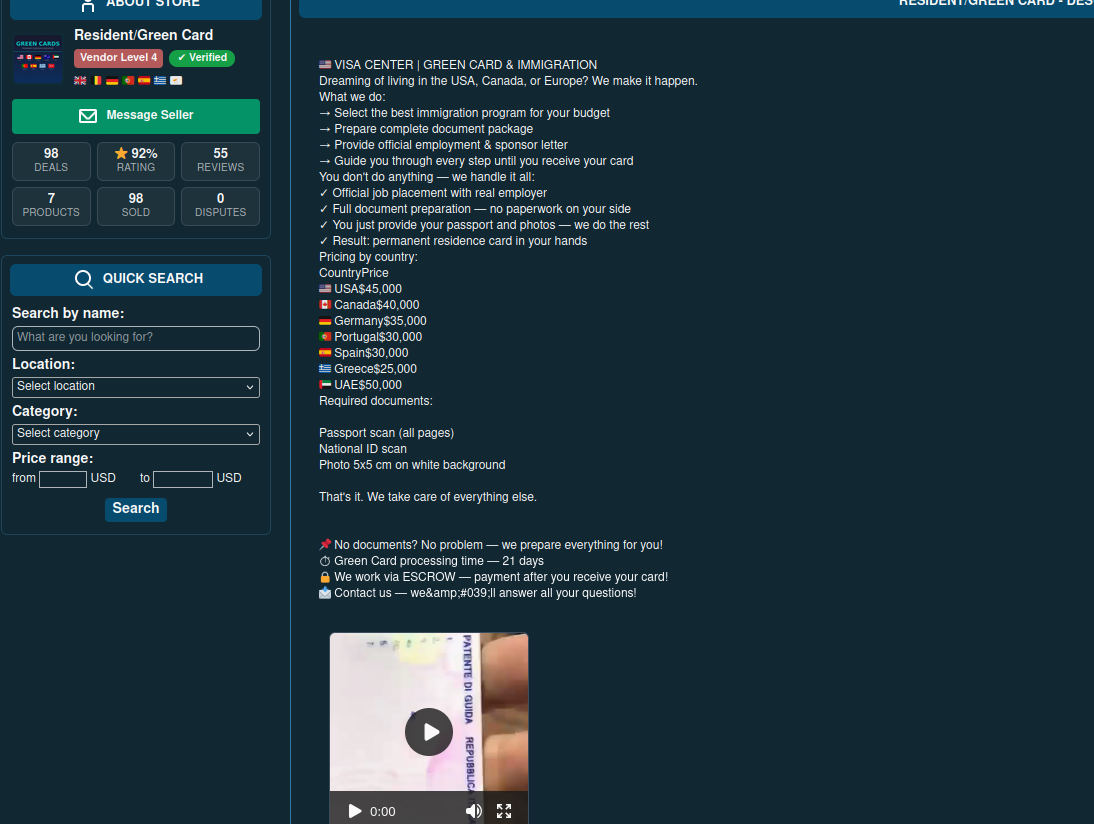 Scammers and Genuine Offers: The Dark Web Passport DilemmaDiscover the realities behind buying passports online, the true costs, and the risks associated with dark web transactions.
 Dark Web IP Address: Understanding AnonymityLearn how IP addresses function on the dark web and their role in maintaining anonymity while navigating hidden networks.